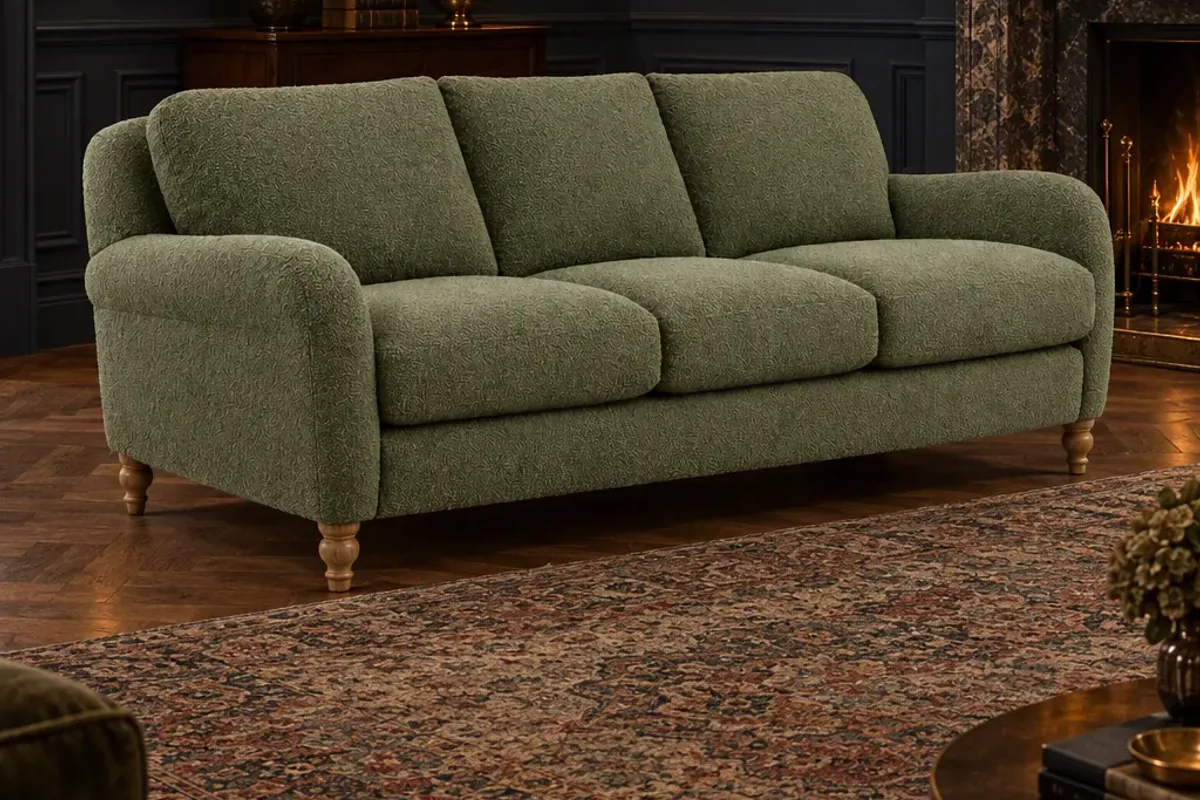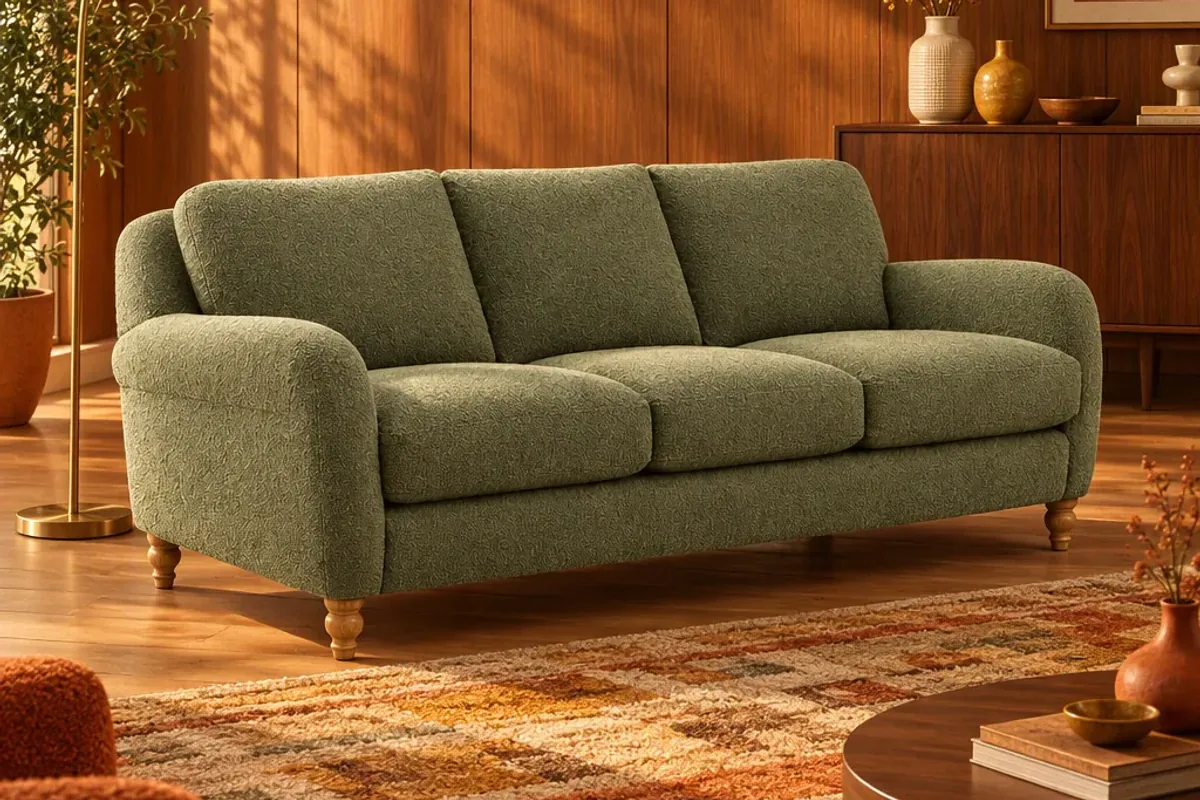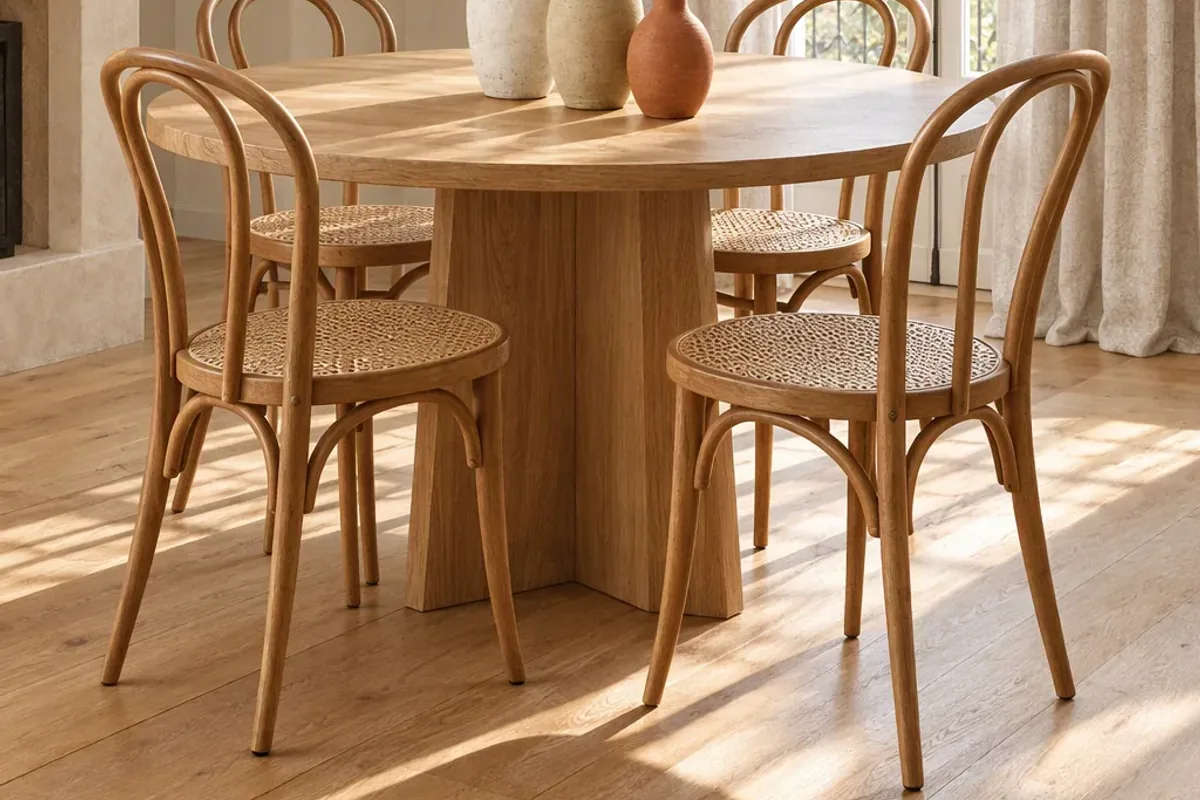
Augmented reality and AI room visualisation answer slightly different questions. AR places a 3D model into your live camera view, so it is best for checking whether something fits a particular spot. AI places a product into a photo of the room, so it is best for judging how the finished room will look. For most furniture decisions, shoppers need a bit of both.
How does AR work?
AR needs a 3D model of the product. The shopper points a phone at the floor, the app detects the surface and the model appears at true size. They can walk around it and see whether it blocks the door.
Its strength is scale. If the model is accurate, the size on screen is the real size. That is why Amazon, IKEA and Houzz have all built AR features into their apps.
How does AI visualisation work?
The shopper uploads one normal photo of their room and chooses a product. The software reads the room’s perspective and lighting, then places the product into the picture with matching shadows. The result is a still image that looks like a photograph of the room with the new piece in it.
Its strength is realism and ease. There is no app to install and no 3D model to build. The brand only needs a product photo.
How do they compare?
| AR with 3D models | AI from a photo | |
|---|---|---|
| What the brand needs | An accurate 3D model per product and variant | A clear product photo |
| What the shopper needs | A recent phone, good light and a clear floor | One photo of the room |
| Best at | True scale and walking around the piece | Light, mood and the whole room |
| Weak spot | Models can look pasted on, and clutter gets in the way | Scale is realistic, not measured |
| Works on desktop | Limited | Yes |
| Several products together | Possible, but slower | Straightforward |
| Easy to save and share | Screenshots | Yes, it is already an image |
Where does AR struggle?
AR depends on the model. A cheap 3D model looks like a video game object dropped into a real room, and that can put a shopper off a perfectly good sofa. Fabrics are especially hard to make convincing.
It also needs the right conditions. A dim room, a patterned rug or a floor covered in toys can confuse surface detection. And if the old sofa is still sitting where the new one would go, the two overlap on screen.
Where does AI struggle?
AI places the product at a realistic scale by reading the room, but it does not measure the room. It answers “does this look right here?” well. It should not be the only check on whether a wardrobe fits an alcove.
Quality also depends on the product photo. A clear, well-lit source image gives a faithful result. A poor one gives the software too much to guess.
Which is better for a brand?
It depends on your catalogue and your budget.
- A small range of hero products: 3D and AR can be worth the investment, and the models are useful for rendering too.
- A large or fast-changing range: AI from photos is far more practical, because every new product is ready as soon as it is photographed.
- Lighting, curtains, rugs and decor: AI tends to work better, because these depend on the light and feel of the whole room.
Cost matters as well. Each 3D model has to be made and maintained. A photo-based approach uses images you already own.
Can you use both?
Yes. A sensible setup is AI for breadth and discovery, and AR for depth on your best sellers. On the Splatr marketplace, shoppers upload one photo and place products from different brands at realistic scale, lighting and perspective, then buy on the brand’s own product page.
Whichever you choose, say plainly that the preview is a visualisation, and keep dimensions easy to find. For practical next steps, read how small brands can offer view in your room and how to reduce furniture returns.
Put the guide into practice.
Stage your own products and make your first reel in Splatr.
7-day free trial.